Blast Beats and Blood Pressure: How Metal Acts Are Terrorizing Horror Games Into Greatness
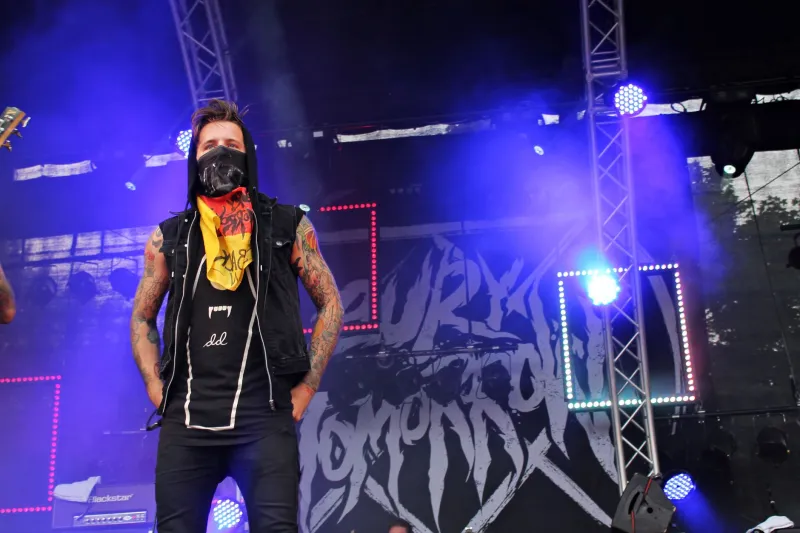
Somewhere between a diminished chord and a blast beat that sounds like a washing machine full of bones, something clicked. Horror game developers—the ones who actually care about atmosphere—started realizing that the same sonic philosophy powering death metal stages in venues that smell like regret was exactly what their haunted corridors needed. Not strings. Not ambient drone pads. Riffs.
The marriage of metal and horror gaming isn't new—it's been bubbling underground for years. But in the current landscape, it's gone from niche experiment to legitimate creative movement. Established acts, underground composers, and bedroom producers raised on both Slayer and Silent Hill are reshaping what it means for a horror game to sound terrifying. We dug into the phenomenon, and what we found was louder than we expected.
The Problem With "Scary Music" (And Why Metal Fixes It)
Traditional horror scoring has a formula. You've heard it a thousand times: slow strings, a sudden brass stab, some unsettling chromatic movement, maybe a children's choir if the budget allows. It works. It's been working since Bernard Herrmann made everyone afraid of showers in 1960. But familiarity breeds comfort, and comfort is the enemy of dread.
Metal doesn't have that problem. The genre is built on discomfort. Down-tuned guitars create frequencies that physically agitate the listener's nervous system. Blast beats at 220 BPM trigger the same stress responses as actual danger. Vocal techniques that sound like someone being processed through industrial machinery are, objectively, unsettling regardless of context. Metal wasn't designed to be calming background music. It was designed to feel like something is very wrong.
Horror games need something to feel very wrong. The partnership was inevitable.
The Architects: Composers Who Live in Both Worlds
The most interesting figures in this space aren't mainstream metal acts licensing existing tracks—they're composers who grew up in metal culture and brought its vocabulary into game audio design.
Akira Yamaoka isn't a metal musician in the traditional sense, but the Silent Hill series' sonic architect understood that industrial noise, distorted guitar textures, and rhythmic aggression could create psychological horror more effectively than any horror movie score. His work on the early Silent Hill games is essentially the proof of concept that the entire movement is built on. The scratchy, degraded guitar work on tracks like "Theme of Laura" sounds like the instrument itself is dying. That's not an accident.
More recently, composers working in the independent horror space have brought explicitly metal sensibilities to atmospheric scoring. Games like Agony, Scorn, and the Doom franchise (more on that in a moment) have demonstrated that full-on metal composition isn't just compatible with horror—it's sometimes the only appropriate choice.
Mick Gordon and the Doom Blueprint
If you want to understand why metal and gaming clicked at an institutional level, you start with Mick Gordon's work on Doom (2016) and Doom Eternal. Gordon, an Australian composer with deep metal roots, built the Doom soundtrack using actual guitar and bass recordings processed through synthesizers, creating something that existed between metal and industrial noise—a sonic texture that felt genuinely demonic.
The technique was groundbreaking enough that it got serious coverage in music production circles, not just gaming press. Gordon essentially showed the industry that metal composition wasn't a gimmick or a marketing angle. It was a legitimate tool for creating specific emotional states—in Doom's case, the feeling that you are an unstoppable force of violence moving through Hell itself. The music didn't underscore the action. It was the action.
While the composer's relationship with id Software ended acrimoniously (a whole separate saga), the musical legacy is untouchable. Every horror game developer who has hired a metal-influenced composer since 2016 owes something to that soundtrack.
Underground Metal Acts Making the Jump
Beyond established composers, actual touring metal bands have started crossing into horror game scoring with genuine artistic investment rather than simple licensing deals.
Bands operating in the black metal and doom metal spaces have a particular advantage here—genres built on atmosphere, dread, and the theatrical performance of darkness translate naturally into interactive horror environments. The long, slow builds of funeral doom create tension that horror game pacing desperately needs. Black metal's lo-fi aesthetic and themes of isolation map perfectly onto horror gaming's visual language.
Several indie horror developers have specifically sought out underground metal acts for their soundtracks, recognizing that bands who've spent years crafting albums that feel like descending into something dark already know exactly how to score a descent into something dark. The creative alignment is genuine, not manufactured.
Why Metal's Theatricality Is the Secret Weapon
Here's what people outside metal culture often miss: the genre has always been theatrical. The corpse paint, the elaborate stage productions, the mythology-heavy lyrics about death and chaos—metal is performative darkness. It understands that horror is a craft, that dread is a constructed experience, that the aesthetic of evil is its own art form.
Horror games operate on identical principles. They are theatrical experiences designed to make you feel specific negative emotions in a controlled environment. They build mythology, construct atmosphere, and use every available sensory tool to sell you on a world where something has gone terribly wrong.
Metal musicians don't need to be briefed on any of this. They've been doing it their entire careers.
What's Coming Next
The trend is accelerating. Horror game budgets are expanding in the indie space thanks to platforms like Steam making global distribution viable for small studios, and those studios are actively seeking composers who understand atmosphere over melody. Metal's underground is full of exactly those people.
We're also seeing crossover in the other direction—metal acts releasing albums specifically designed as horror game soundtracks even when no game exists, treating the format as its own artistic genre. The influence is flowing both ways.
For horror gaming audiences, this is unambiguously good news. The era of generic orchestral stings is not over, but it's got serious competition. Competition that plays at volumes that can damage your hearing and doesn't apologize for it.
At NecoBouncer, we consider that a feature, not a bug.
Crank it up. The monsters are more believable when your ears are bleeding a little.