Pixel Purgatory: The Underground Cult Keeping 'Dead' Games Breathing Long After Publishers Moved On
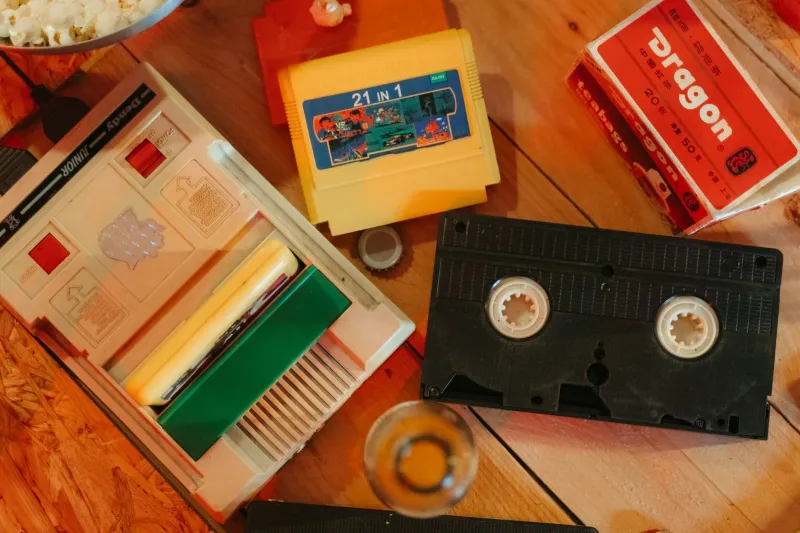
Here's a number that should make you feel something: according to the Video Game History Foundation, approximately 87% of classic video games are out of print and commercially unavailable. Not rare. Not expensive. Gone. Vanished from legal accessibility as completely as if they never existed — which, from a corporate perspective, is basically the point. Old games don't generate new revenue. Old games generate support costs. Old games, in the cold calculus of quarterly earnings, are liabilities wearing nostalgia's clothing.
The people who disagree with this assessment are doing something about it. Quietly, obsessively, and with a legal exposure they've largely decided not to think too hard about.
The Graveyard Shift
The ecosystem of dead-game preservation is bigger, weirder, and more sophisticated than most people outside it realize. It encompasses emulation projects running decades-old console hardware in software, private server communities maintaining the online infrastructure of MMOs long after their official servers went dark, archival organizations digitizing physical media before it degrades past recovery, and individual collectors who have built personal libraries that would make university special collections weep with envy.
These communities don't overlap cleanly or organize under any single banner. What they share is a conviction — sometimes explicitly philosophical, sometimes just gut-level — that games are cultural artifacts worth preserving, and that the market has catastrophically failed to do so.
"A book from 1995 is still a book from 1995," said one member of a private server community maintaining a beloved MMO that officially shut down in 2014. He goes by Tombward online and has been running server infrastructure out of his apartment in the Pacific Northwest for three years. "Nobody goes to Barnes & Noble and finds that the Lord of the Flies is discontinued. But games? Games just disappear. And somehow that's normal. It's not normal."
The Private Server Economy
For massively multiplayer games, death comes when the official servers shut down. No servers, no game — the entire experience simply ceases to exist, regardless of how many people spent years building communities and memories inside it. Publishers occasionally offer offline modes or client releases before shutting down, but this is the exception rather than the rule, and the history of MMO sunset announcements is littered with broken promises about legacy access.
Private server communities step into this void. Using reverse-engineered server software, community-maintained infrastructure, and player databases backed up before the lights went out, these groups reconstruct functional versions of dead games and run them indefinitely. Some have been operating for over a decade. Some have player populations that rival the game's original active base in its final months.
The legal situation is, to use the technical term, extremely murky. Publishers have issued cease-and-desist letters. Some private server projects have been shut down. Others have operated openly for years without incident, apparently below the threshold of enforcement priority. A few have reached unofficial accommodations — nobody talks about it, nobody sues anybody, the servers run.
"We're not making money," Tombward pointed out. "We're not selling anything. We're just running a game that the company decided wasn't worth running anymore. I have a hard time feeling bad about that."
The Archivists at the Edge
Beyond the private server world, there's a quieter and arguably more urgent preservation fight happening at the physical level.
Cartridges degrade. Optical media rots. Magnetic storage fails. The physical substrates that games from the 1980s, 90s, and early 2000s exist on are aging toward unreadability, and the window for digitizing them before they're lost forever is genuinely closing. Organizations like the Internet Archive and the Video Game History Foundation have made this work their explicit mission, but the scale of the problem dwarfs the resources available to address it.
Filling the gap are individual collectors operating at their own expense with their own equipment — people who have spent thousands of dollars on cartridge readers, disc imaging hardware, and storage infrastructure to digitize games nobody else has gotten around to yet. Some of what they've preserved exists in no other known copy.
"I have games on my drive right now that are not anywhere else on the internet," said one collector who operates under the name Hexrot and has been archiving obscure titles for fifteen years. "Regional releases, limited print runs, stuff that just never got attention. If my drives fail and I haven't shared it, it's gone. Like, actually gone. That's not dramatic. That's just math."
Why This Should Matter to You (Even If You Don't Care About Old Games)
Here's the argument worth making to people who shrug at the idea of preserving a 30-year-old platformer: games are not a minor cultural artifact. They are the dominant entertainment medium of the generation currently running the world, and increasingly of every generation behind them. The history of how games developed — mechanically, artistically, culturally — is the history of a significant chunk of American creative life over the past four decades.
Losing that history because it's not profitable to maintain it is the same catastrophe as losing films, losing music, losing literature. We just don't treat it that way yet because the people making preservation policy grew up watching television, not playing Super Nintendo.
The preservation community makes this argument constantly and exhaustedly. They've been making it to Congress, to the Copyright Office (which grants limited preservation exemptions that advocates argue don't go nearly far enough), and to publishers who show occasional interest and then redirect attention to whatever live-service title is generating revenue this quarter.
The Ones Who Just Refuse
Beyond the archivists and the legal advocates and the private server administrators, there's a third category of dead-game devotee that's harder to categorize: the people who simply will not stop playing.
Communities built around delisted and abandoned games maintain active Discord servers, host tournaments, produce fan content, and generate genuine ongoing culture around games that official channels have entirely abandoned. They are, in a very real sense, the game's last living tissue — the proof that the thing was worth something, maintained entirely by people who got nothing for their trouble except the game itself.
That's the part that deserves more respect than it gets. Not the legal complexity, not the technical achievement, not even the archival importance. Just the raw stubbornness of people who found something they loved and decided, quietly and without ceremony, that they weren't going to let it go.
Publishers move on. Players don't always have to.
The servers stay up. The drives keep spinning. The dead games keep breathing.
Somebody has to do it.