The Undead Log-In: How Devoted Players Are Haunting MMOs That the Servers Forgot
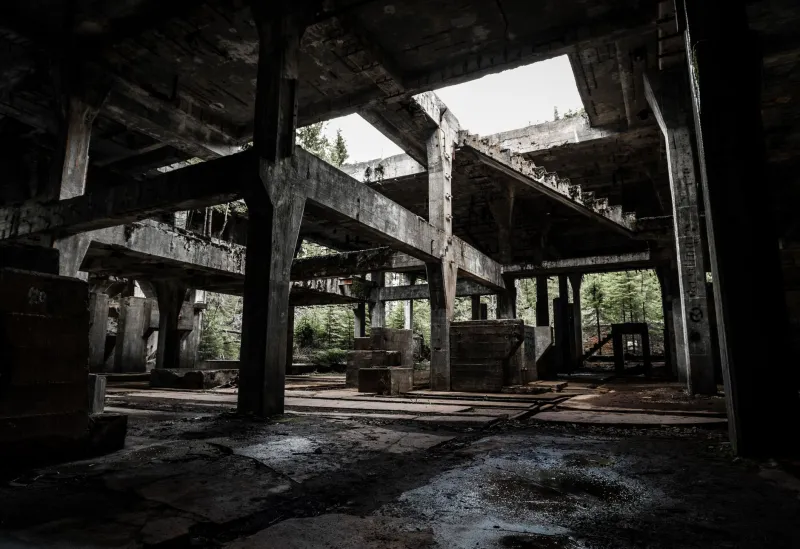
Imagine coming home one day to find your house has been demolished. Not sold — demolished. The land is empty. And then imagine that instead of grieving and moving on like a reasonable person, you and a few hundred of your closest friends quietly rebuilt the entire structure from memory, moved back in, and started decorating.
That's roughly what's happening across the internet right now in the world of defunct online games. When publishers shut down servers — and they do, constantly, with a casualness that would be alarming if we weren't so numb to it — the official story ends. The unofficial one is just getting started.
The Anatomy of a Digital Ghost Town
Server shutdowns have been a consistent feature of online gaming since the early days of MMORPGs. The economics are straightforward: maintaining servers costs money, and when a game's active playerbase drops below the threshold that justifies that cost, the plug gets pulled. Usually there's an announcement. Sometimes there isn't. Either way, on a specific date, a world that existed — that people built friendships inside, had first experiences inside, grieved losses inside — simply stops.
The players who refuse to accept this outcome are doing something genuinely remarkable from a technical standpoint. Reverse-engineering a game's server architecture requires real expertise. You need to understand network protocols, database structures, client-server communication — the kind of knowledge that, applied professionally, would land you a comfortable job at any number of tech companies. Instead, these people are using it to make sure the Club Penguin town square stays populated.
And yes, Club Penguin is absolutely part of this story.
The Iceberg That Wouldn't Melt
Disney shut down the original Club Penguin in March 2018 after over a decade of operation. The replacement, Club Penguin Island, was a mobile-focused reimagining that was received so poorly it was itself shut down less than two years later. For most companies, this would be the end of the penguin saga.
Instead, what emerged was Club Penguin Rewritten — a fan-run private server that at its peak was pulling in hundreds of thousands of active users. Not nostalgic adults popping in for a few minutes. Hundreds of thousands of active users. Disney eventually sent legal threats that resulted in arrests of the developers in 2022, but the shutdown didn't stick. New forks, new servers, new communities sprouted up almost immediately. The penguin, it turns out, is unkillable.
What's striking about the Club Penguin case isn't just the scale — it's the demographics. A significant portion of the private server community isn't just nostalgic millennials. It's actual kids who never played the original, discovering it through the private servers and finding genuine community there. The game is dead. The game is also, somehow, still alive and recruiting new members.
The MMO Graveyard Has a Thriving Economy
For every Club Penguin situation, there are dozens of more obscure cases playing out in quieter corners of the internet. Star Wars Galaxies, Sony's ambitious and deeply weird MMO that was shut down in 2011, now runs on multiple fan-operated private servers with communities that have been active for over a decade post-shutdown. SWGEmu and Legends have become full-fledged gaming communities in their own right, complete with their own drama, governance structures, and occasionally heated debates about server rules.
City of Heroes — the beloved superhero MMO that NCSoft shut down in 2012 despite a passionate playerbase — had a private server operating in secret for years before it went public in 2019. When Homecoming launched publicly, the response was overwhelming. Thousands of players returned. New ones joined. The game that had been declared dead was suddenly, unmistakably, alive.
These aren't just nostalgia exercises. These communities build on the original games, add content, fix bugs the original developers never got around to, and in some cases produce experiences that are arguably better than what the official servers offered before shutdown.
What People Are Actually Looking For
Spend any time talking to private server communities and a consistent theme emerges: it's not really about the game. Or rather, it's not only about the game. It's about the specific social fabric that grew up inside that game — the guild you built, the friends you made, the inside jokes that only make sense if you spent three years in the same virtual world together.
Online games, at their best, function as third places — spaces that are neither home nor work where social bonds form organically. When the server shuts down, it doesn't just end a game. It demolishes a community's meeting space. The private server movement is, at its core, a refusal to let that demolition be permanent.
There's something deeply human about it, even when the specific context involves cartoon penguins or space opera crafting systems.
The Legal Tightrope Walk
None of this is legally uncomplicated, and the people running these servers know it. Most private server operators exist in a state of permanent legal ambiguity — technically violating intellectual property law, but often tolerated by publishers who either lack the resources to pursue action or quietly recognize that an active fan community keeps their IP culturally relevant.
The Club Penguin situation showed that Disney, at least, has the resources and the inclination to act when a private server gets big enough to attract attention. But for every high-profile crackdown, there are dozens of smaller servers that operate quietly for years without interference.
The community has adapted. Documentation gets distributed. Code gets backed up across multiple locations. When one server goes down, the knowledge to rebuild it persists. The digital undead, it turns out, are very good at not dying twice.
The Ghost in the Machine Isn't Going Anywhere
There's a version of this story that ends with publishers figuring out a better model — official legacy servers, charitable licensing for fan projects, structured handoffs to community operators when commercial viability ends. Some companies have gestured in this direction. Most haven't.
Until the industry as a whole reckons with what it means to build communities inside commercial products and then shut those products down without warning, the private server ecosystem will keep growing. The players will keep logging in. The ghost towns will keep their lights on.
Die. Respawn. Find a private server. Refuse to leave.