Die Better: How Gen Z Speedrunners Turned Self-Destruction Into the Ultimate Flex
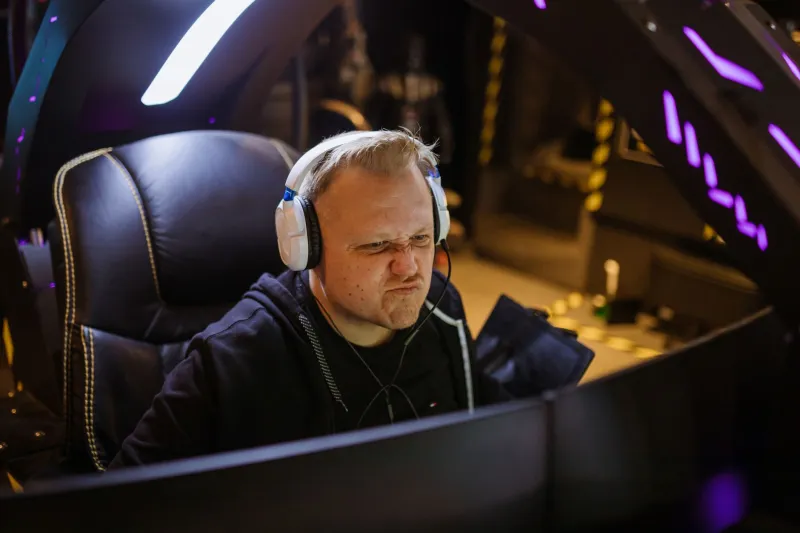
Somewhere on Twitch right now, a 19-year-old is attempting to beat Elden Ring using only a torch, no leveling up, and a strict rule that they must bow to every enemy before attacking. They've died 847 times. Their chat is losing its collective mind. And honestly? They're winning.
Not in the traditional sense, obviously. The credits haven't rolled. The trophy hasn't popped. But in the warped, beautiful economy of modern gaming culture, this person has accumulated something far more valuable than a completion percentage — they've accumulated clout through suffering, and an entire generation is here for every agonizing second of it.
Welcome to the era of the self-imposed challenge run, where the whole point is to make an already brutal game functionally unplayable, and then absolutely demolish it anyway.
The Rules Are a Lie (And Always Were)
Let's back up for a second. Traditional speedrunning — the kind your older sibling might've discovered on YouTube circa 2012 — was already a pretty unhinged hobby. People spent thousands of hours routing optimal paths through games, memorizing frame-perfect inputs, and exploiting glitches so obscure the developers themselves couldn't explain them. It was nerdy, obsessive, and completely detached from how any normal human being plays a video game.
But Gen Z looked at that and said: not hard enough.
The new wave of challenge-run culture doesn't just optimize the path through a game — it actively poisons the path, then skips down it anyway. No-hit runs. Pacifist runs in games built entirely around violence. Backwards playthroughs where you do the final boss first and then meander through the tutorial like some kind of narrative anarchist. Weapon-locked runs where you commit to using only the most garbage item in the game — the wet cardboard sword, the starting pistol, the literal rock.
The restrictions aren't just difficult. They're philosophical. They're a declaration that the developer's intended experience is merely a suggestion, and that the real game begins when you throw the rulebook into a volcano.
Suffering as Status Symbol
Here's where it gets genuinely interesting from a cultural standpoint. This phenomenon isn't happening in a vacuum — it mirrors something much broader going on with Gen Z's relationship to achievement and status.
For a generation raised on hustle culture discourse, late-stage capitalism anxiety, and the slow spiritual death of traditional success metrics, the idea that how hard you worked matters more than what you got isn't just relatable — it's practically a religion. The grind IS the product. The struggle IS the content. A speedrunner who beats Dark Souls without getting hit isn't just showing off their skill; they're performing a kind of digital asceticism that resonates deeply with an audience that's watched conventional goalposts get moved their entire lives.
You can't afford a house? Cool, watch me beat this game with a broken weapon and zero healing items. The economy is a nightmare? At least I'm the first person to finish Hollow Knight using only the Fragile Strength charm on a Tuesday in March. It sounds absurd — because it is — but the emotional logic tracks harder than you'd expect.
Streamer and challenge-run veteran Syringe_Dreams (not their real name, obviously) put it bluntly in a recent stream: "Normal completion means nothing anymore. Anyone can finish a game. I need to finish it in a way that makes me question my entire personality." The chat responded with about four hundred skull emojis. Community approved.
The Twitch Drama Industrial Complex
Of course, where there's obsessive niche culture, there's beef. And the challenge-run community has beef in truly spectacular quantities.
The drama usually starts with rule disputes — specifically, what counts as a legitimate restriction. Is a no-hit run still valid if you get clipped by environmental damage? Does using a glitch to skip an entire section violate the spirit of a "no-damage" run, or is exploiting developer oversight just advanced strategy? These arguments unfold across Reddit threads, Discord servers, and Twitch chat with the intensity of congressional hearings, except the stakes are somehow both lower and more emotionally devastating.
Then there are the record disputes. The speedrunning and challenge-run community tracks world records with the rigor of Olympic officiating, and when someone submits a run that the community suspects of manipulation — a suspiciously clean no-hit attempt, a time that seems physically impossible — the backlash is biblical. We're talking doxxing threats, coordinated harassment campaigns, and enough forum drama to fill several seasons of reality television.
It's messy, it's toxic in patches, and it's also completely captivating to watch from the outside. The NecoBouncer audience, built on the premise that dying repeatedly is just part of the experience, will feel right at home.
The Unhinged Devotion That Makes It All Worth It
Strip away the drama and the cultural analysis, and what you're left with is something genuinely kind of beautiful: people loving games so completely that they've invented entirely new ways to be destroyed by them.
The no-hit runner who spends six months on a single attempt. The backwards-playthrough streamer who maps out an entire game's sequence in reverse just to experience the story from a completely alien angle. The person who beats Sekiro using only the starting sword and refuses to upgrade it because they made a promise to themselves at 2 AM and they're not a quitter.
These aren't people who got bored of games. These are people who loved games so much they started building custom prisons inside them, just to have the satisfaction of breaking out.
And in a gaming landscape increasingly dominated by live-service grind loops, battle passes, and engagement metrics designed by behavioral psychologists to keep you spending money, there's something almost punk rock about deciding that the most meaningful thing you can do with a video game is impose your own impossible rules and then suffer magnificently trying to follow them.
Respawn, Repeat, Reinvent
The speedrunning and challenge-run community has always existed at the fringes of gaming culture — the weird, devoted corner where people take games more seriously than the developers ever intended. But what Gen Z has done is weaponize that devotion and turn it into a cultural statement.
Winning isn't the point. The point is how you lose, how many times you lose, and whether you can make those losses spectacular enough that thousands of strangers on the internet will stick around to watch you try again.
Die. Respawn. Repeat. No apologies. And if you're going to do it, do it with a broken weapon, a backwards route, and the unshakable confidence that this time — this time — it's all going to click.
The credits can wait. The suffering is just getting good.