Pain Merchants: The Streamers Getting Rich By Dying Constantly on Camera
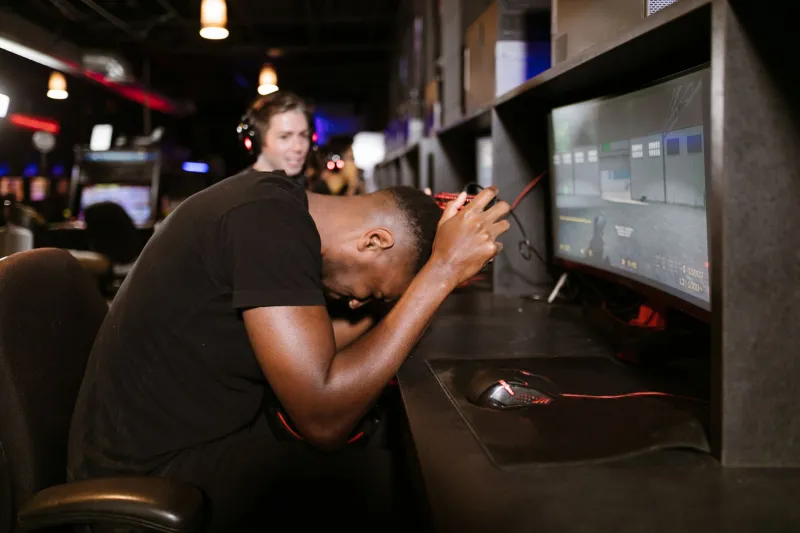
Let's establish something upfront: there are people on the internet right now — actual human adults with mortgages and dietary restrictions — who are making six figures by intentionally playing the hardest video games they can find, on the most punishing settings available, and then screaming into a microphone when it inevitably goes wrong. This is the content economy we live in. It's beautiful. It's deranged. And it's not going anywhere.
The masochism-as-entertainment pipeline has been quietly constructing itself for years, but somewhere around the mid-2010s it crossed a threshold. Dark Souls didn't just become a game — it became a genre, a philosophy, and eventually a streaming format. Now we have an entire ecosystem of creators who've built careers on the specific premise that watching them suffer is more entertaining than watching them succeed.
They're not wrong.
The Architecture of Designed Suffering
Understanding why this works requires a brief, uncomfortable look at what viewers actually want. And what viewers apparently want — at least a statistically significant number of them — is to watch someone who is very good at something get systematically humiliated by a game that refuses to care about their feelings.
There's a parasocial alchemy at work here. When a streamer hits a wall in Elden Ring — say, Malenia, Blade of Miquella, the FromSoftware boss who has defeated more streamers than any other enemy in recent memory — and they die, and they die again, and they die fifty-seven more times over the course of a five-hour stream, something happens in the chat. A community forms around shared suffering. Inside jokes calcify. Donation messages arrive timed to specific death animations. The failure becomes the content.
This is fundamentally different from watching someone be competent. Competence is impressive but distancing. Suffering is intimate.
The Permadeath Escalation Problem
Here's where it gets genuinely fascinating from a psychological standpoint: the difficulty arms race doesn't stop at hard mode. Once a streamer's audience is conditioned to expect suffering, the pressure to escalate becomes intense. Hard mode becomes permadeath. Permadeath becomes permadeath with a charity donation trigger attached to the difficulty. Charity donations become "if we hit the goal, I play blindfolded."
Several high-profile streamers have built entire channel identities around this escalation structure. The Dark Souls SL1 runs (completing the game at the minimum possible character level) became a rite of passage. Then came no-hit runs. Then no-hit, no-shield, no-summons runs. The goalposts keep moving because the audience keeps moving them, and the streamer — if they're smart about it — keeps finding new ways to make the suffering feel fresh.
The psychological term for what viewers experience watching this is something close to vicarious resilience. You watch someone fail repeatedly, and then you watch them get back up, and something in your brain files that away as meaningful. It's why sports are compelling. It just happens to involve a person screaming at a dragon.
The Money Is Real and It's Weird
Let's talk numbers, because the numbers are genuinely absurd. Top-tier difficulty streamers on Twitch can pull subscriber counts in the hundreds of thousands. A standard Twitch subscription runs $4.99 a month, with streamers typically keeping around 50 percent (more for top earners). Do that math on 200,000 subscribers and you're looking at revenues that would make a mid-level hedge fund manager mildly envious.
And that's before sponsorships, merchandise, YouTube ad revenue from archived streams, and the increasingly common "charity run" model where the streamer's suffering is literally monetized for a cause. There's something poetically on-brand about the fact that getting killed by the same boss for eight hours straight can raise $50,000 for a children's hospital.
The brands have noticed. Energy drink companies figured this out first — the overlap between "person who stays up until 3 a.m. watching someone die in a video game" and "person who consumes alarming quantities of caffeinated beverages" is essentially a perfect circle on a Venn diagram.
What It Means When Failure Becomes the Product
There's a cultural argument to be made here that's worth sitting with for a second. We've spent decades in entertainment valorizing success — the highlight reel, the championship moment, the triumphant montage. Social media accelerated this into a kind of highlight-reel psychosis where everyone's online presence was a curated gallery of their best moments.
Difficulty streaming, almost accidentally, became a corrective. These streamers aren't showing you their best moments. They're showing you their worst ones, in real time, repeatedly, with full audio. And audiences — particularly younger ones — seem to find something genuinely cathartic in that honesty.
There's a reason the phrase "I died" became a meme format. There's a reason FromSoftware's "YOU DIED" screen is one of the most recognizable images in contemporary gaming culture. Failure, properly framed, is relatable in a way that success rarely is.
The Ceiling Nobody Has Found Yet
The difficulty content machine shows no signs of hitting a natural limit. New FromSoftware releases still break streaming records. The Elden Ring DLC broke Twitch concurrent viewership numbers in 2024. Games like Hades, Returnal, and Lies of P have each spawned their own suffering-specialist streaming communities.
And somewhere right now, a streamer you've never heard of is sitting down in front of a camera, booting up something brutal, and setting the difficulty to whatever's above the maximum setting. They're going to die. Probably a lot. And somewhere between the death screen and the respawn, they're going to build something that looks a lot like a career.
Die. Respawn. Monetize. Repeat.